Dining Tables
Dining tables for commercial and residential spaces.
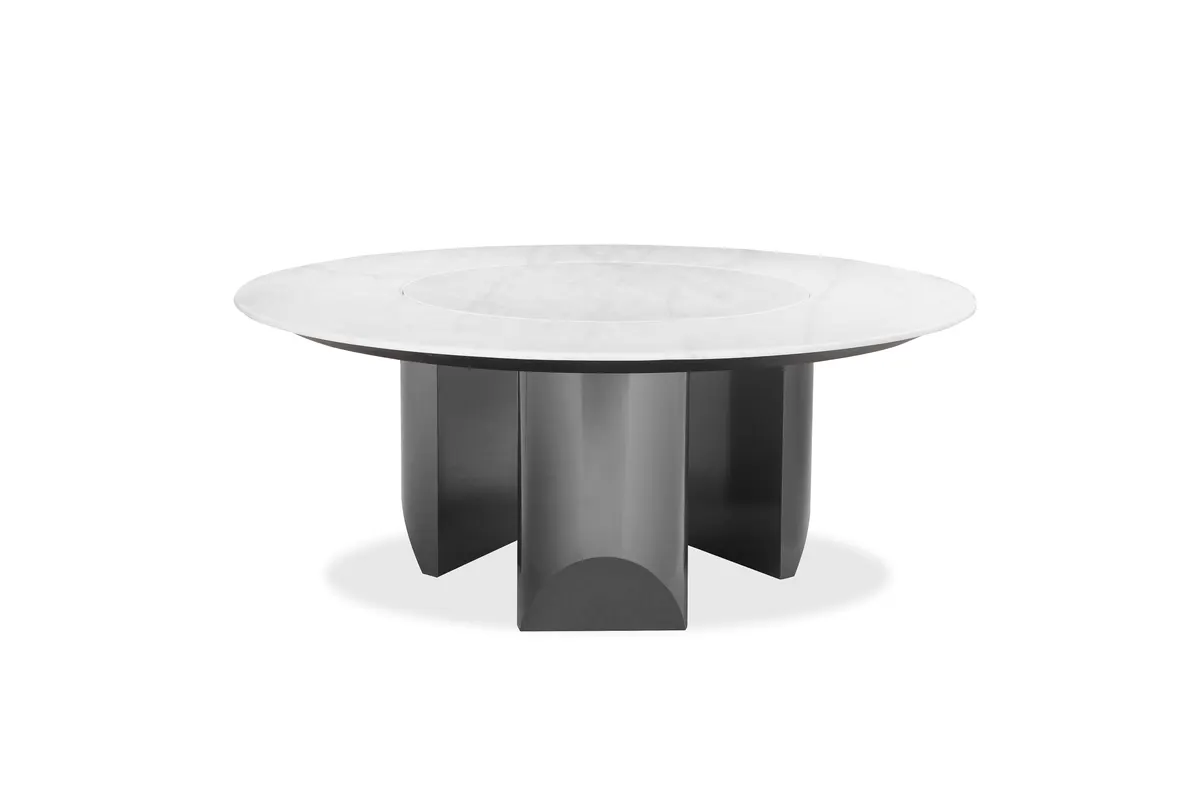
HCD201
HCD201
Flat dark blades drop from the underside of the top, each tapering to a narrow foot, so the table meets the floor on points rather than a solid mass. Four blades gather into a central pedestal on the round version; two carry the rectangular span.
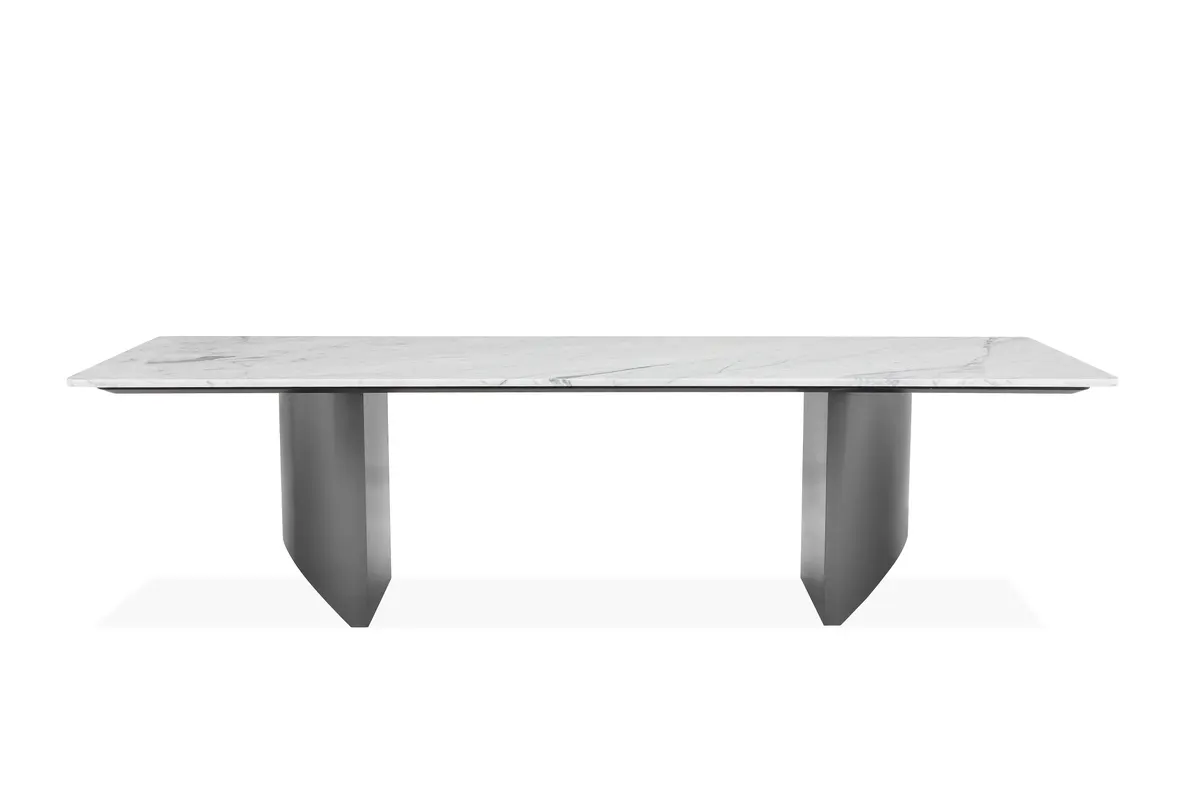
HCD201B
HCD201B
Two slab legs carry the full span, each tapering to a narrow point at the floor. The light top shows fine, scattered veining and a thin, straight edge, and the inboard leg placement leaves the top overhanging at both ends.
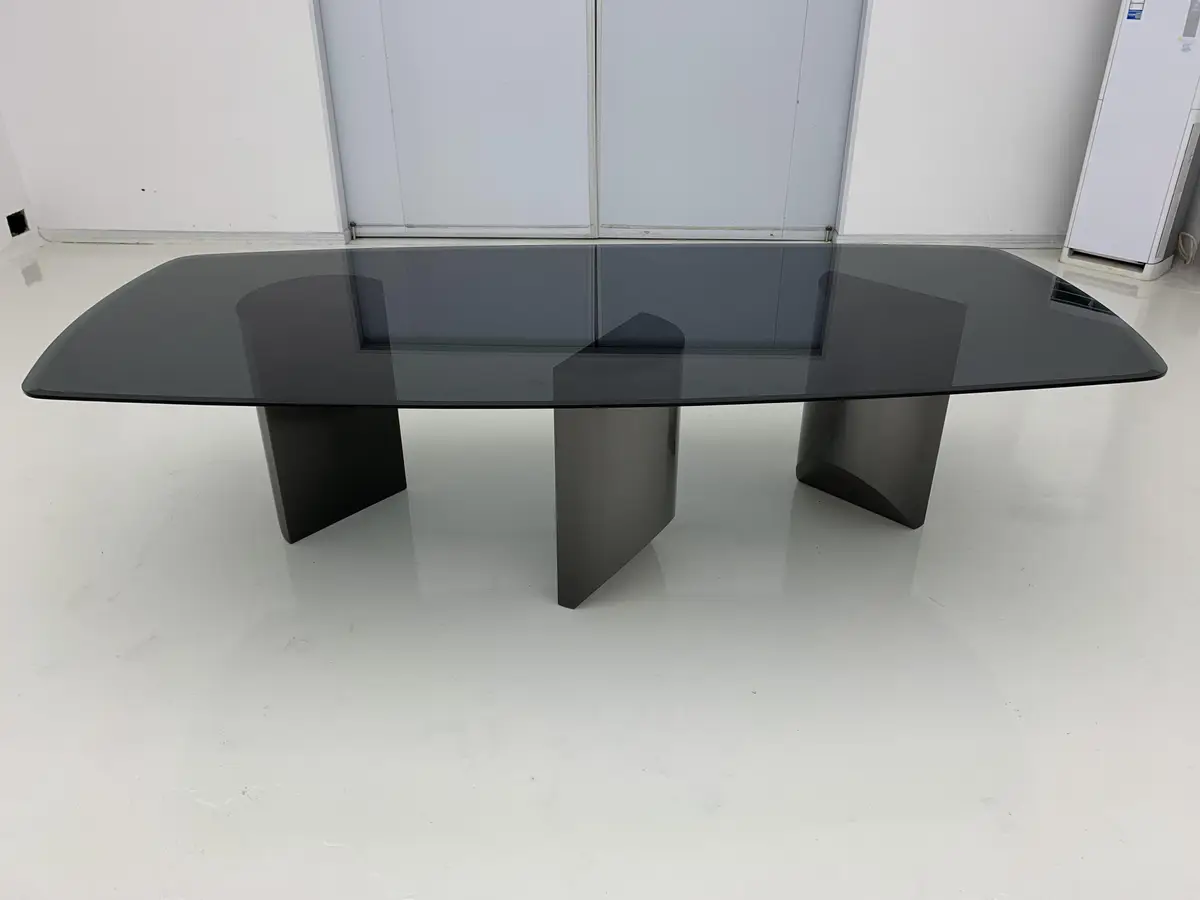
HCD201C
HCD201C
Three flat panels stand on edge to carry a long dark top, each one angled slightly differently so the base reads as a series of blades rather than a single pedestal. The top overhangs them on every side, leaving the panels in shadow beneath it.
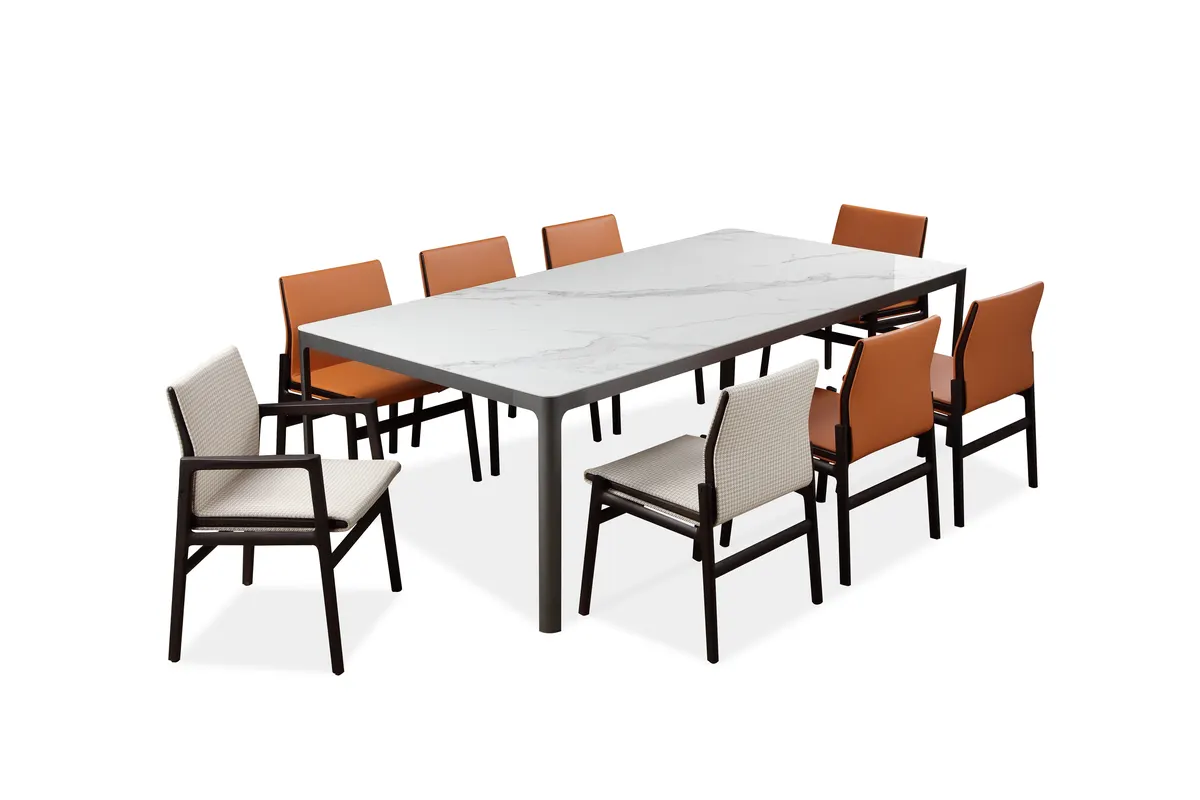
HCD202
HCD202
Corners turn the dark frame downward into four slim legs, so edge and support read as one continuous line. A white top with grey veining sits flush inside that frame, its pattern running the length of the table. The legs meet the apron with a soft curve rather than a joint.
HCD204A
HCD204A
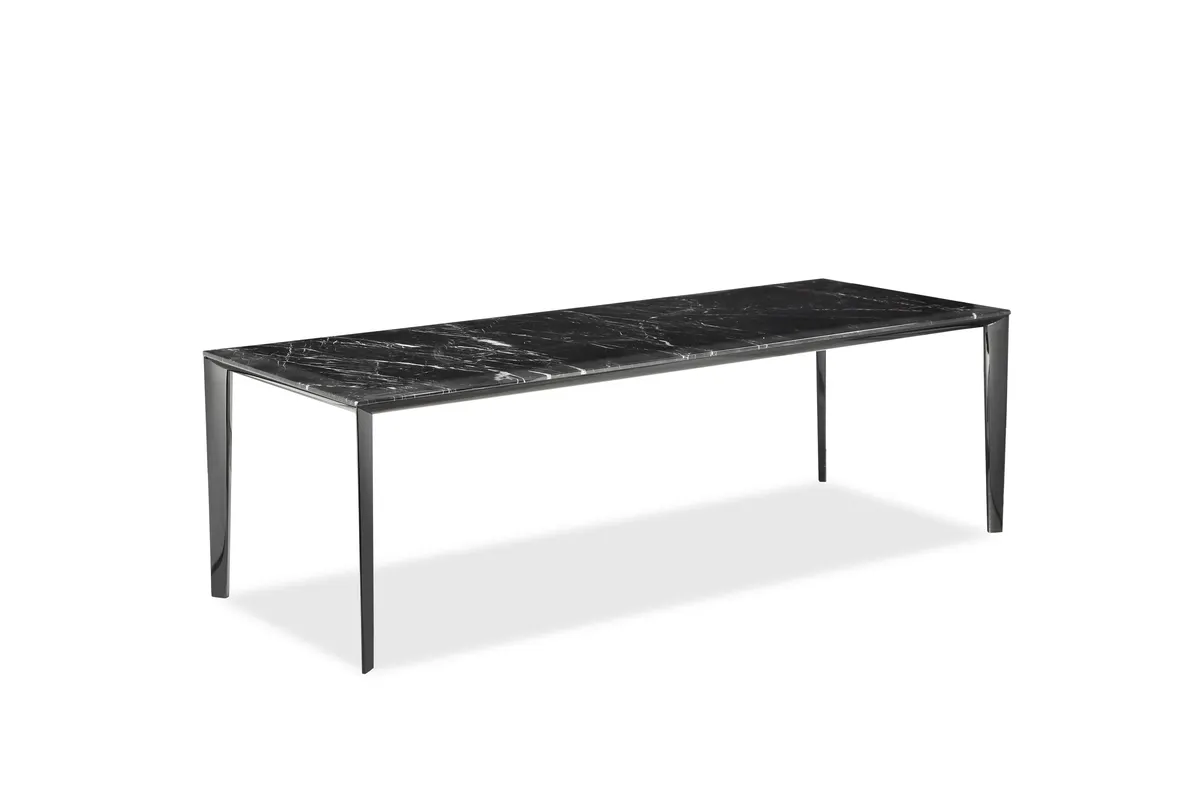
Four legs taper from the top edge to the floor, giving the rectangular table a light footprint despite its wide surface. The dark top carries a dense, broken vein pattern that runs across the full length, and the frame stays thin at every joint.
HCD204B
HCD204B
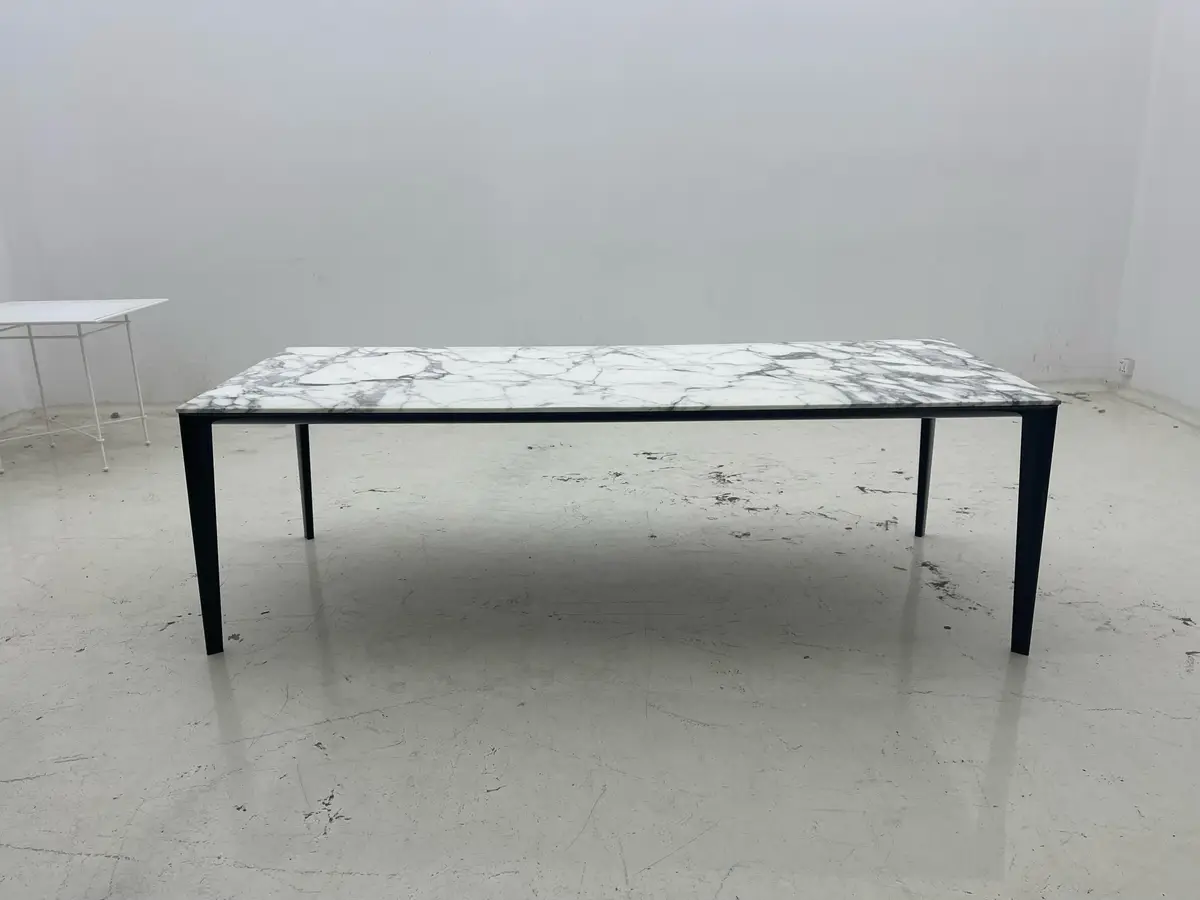
A thin rectangular top with grey veining sits on a black frame, its four square legs set flush to the corners. The edge stays narrow, so the top reads as a plane rather than a slab, and the dark base draws a clear line beneath it.
HCD206
HCD206
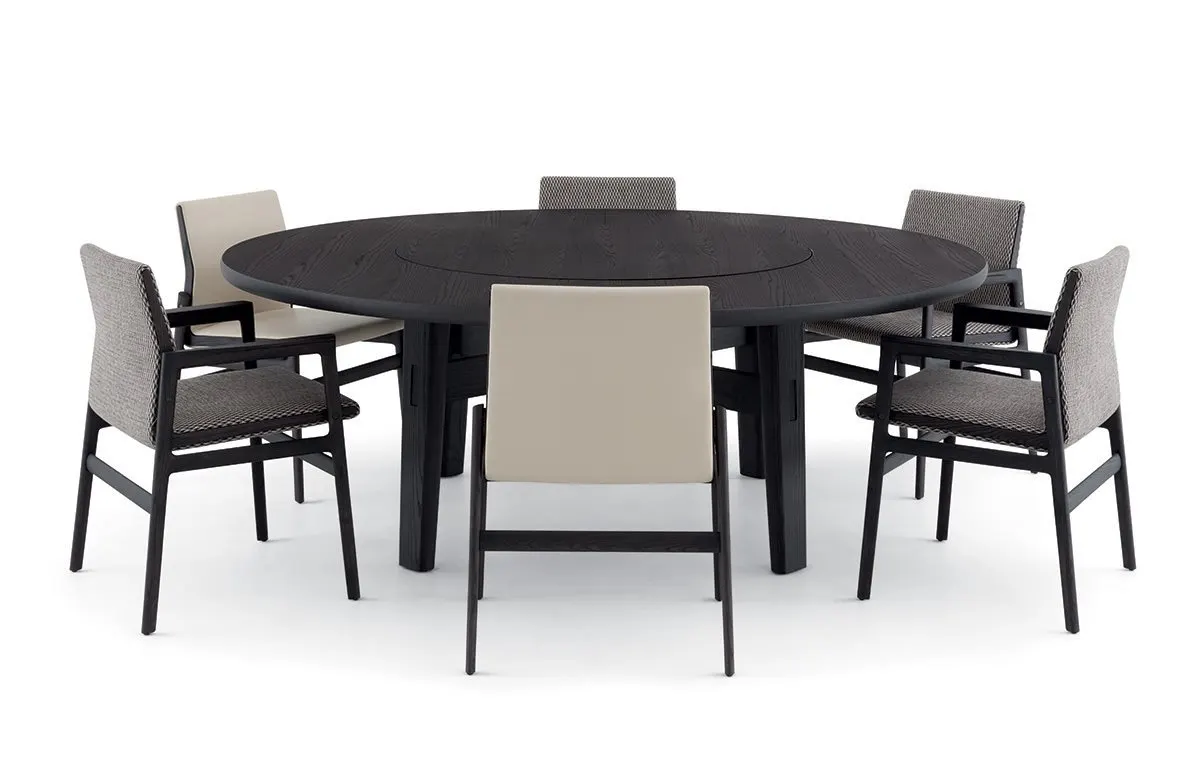
A dark round top carries a lighter disc at its centre, ringed by a slim edge that lifts the surface visually. Four square legs splay slightly outward and meet an X-shaped stretcher set back below the top, so the base reads as an open cross rather than a closed pedestal.
HCD207
HCD207
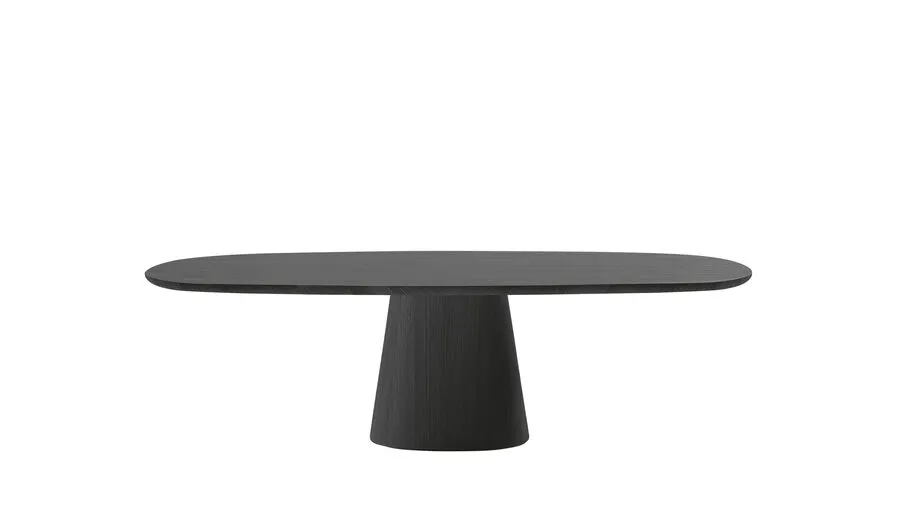
One tapered column carries the whole top, so the table stands on a single point of contact and the floor stays open beneath the rim. The top is a long soft-cornered shape, thin at the edge, and the column widens as it meets the ground.
HCD208A
HCD208A
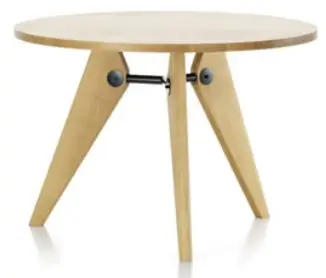
Three splayed legs carry a round top, with a dark stretcher locking them near the top. The stance is wide at the floor and narrow where it meets the surface, so the table reads light from any angle and keeps an open profile.
HCD208B
HCD208B
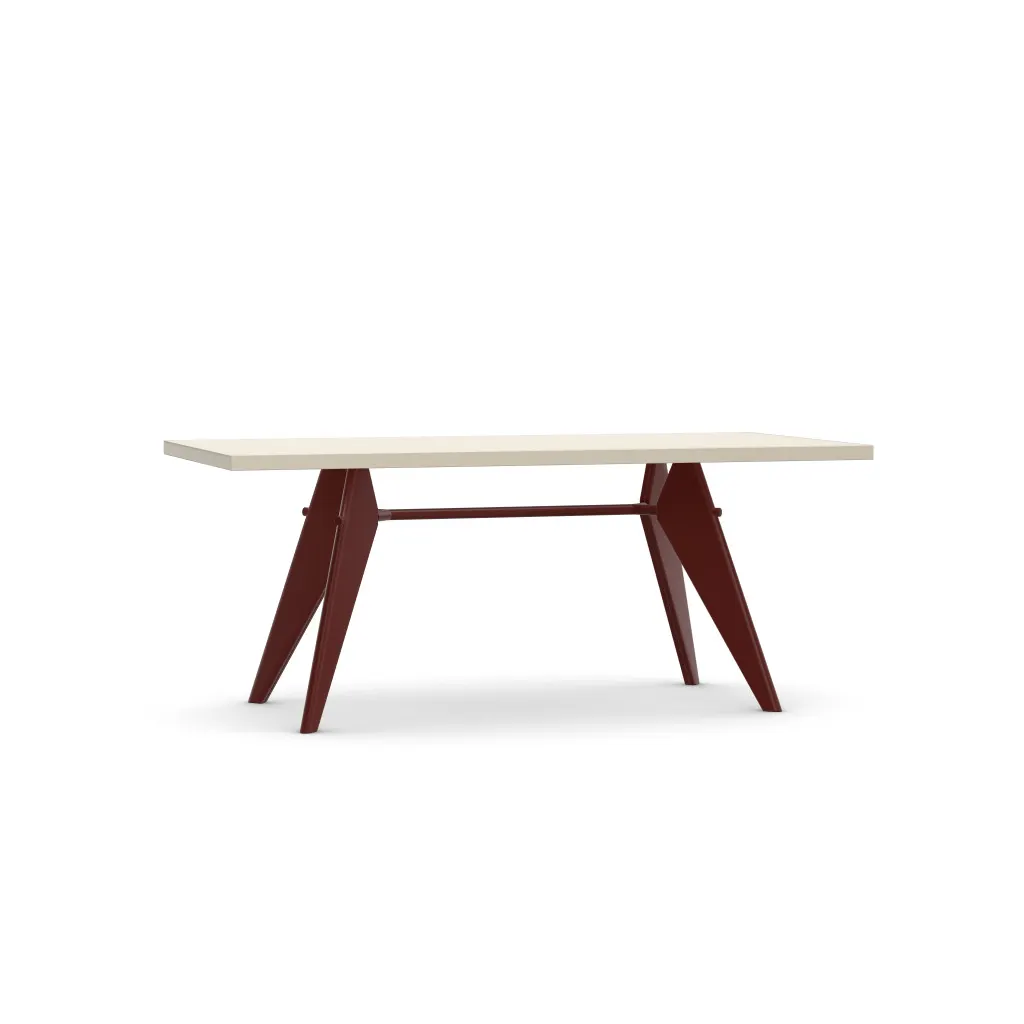
Two splayed trestle legs at each end carry a long pale top, joined by one slim stretcher. The angled legs open outward toward the floor, so the base reads wide and grounded while the top stays visually light above it. A rectangular table for dining rooms and shared tables.
HCD209
HCD209
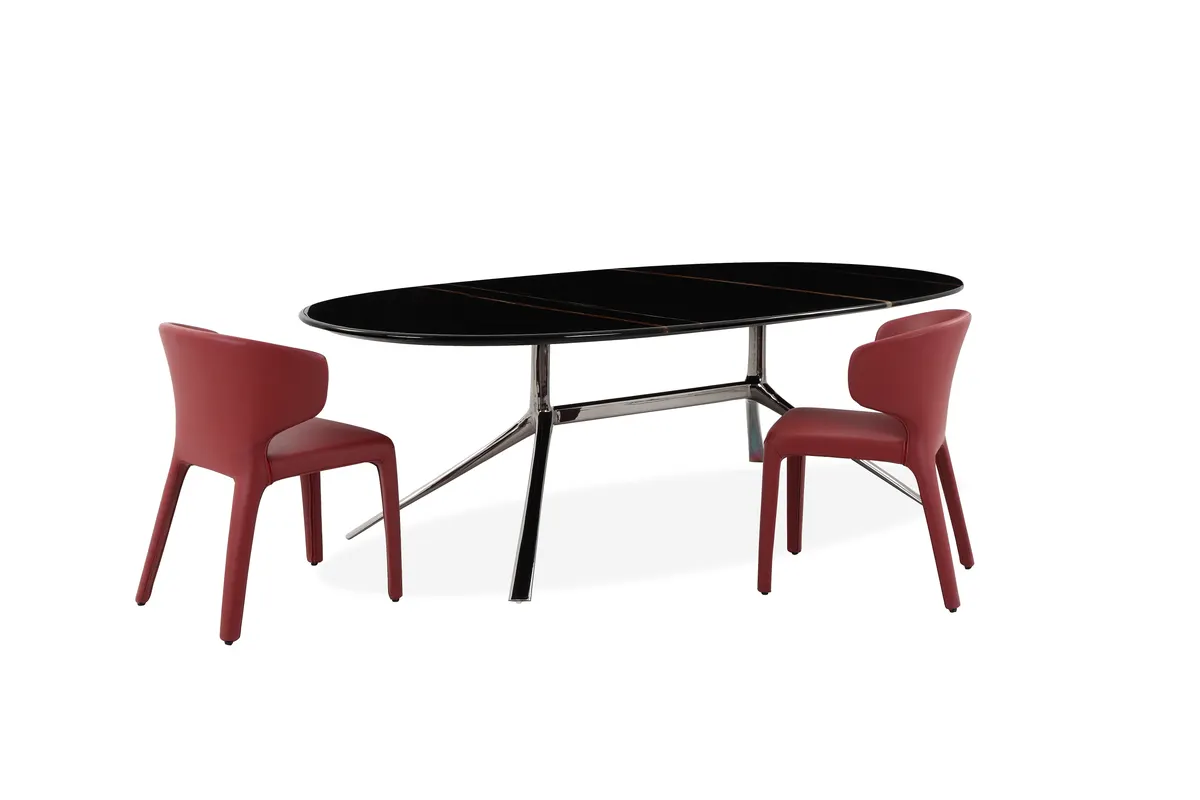
An oval dining table whose top is divided by a single central seam and fine contrasting lines, carried on one column that opens into four splayed feet. The pedestal keeps the floor plane clear, so chairs can be pulled in from any side.
HCD211A
HCD211A
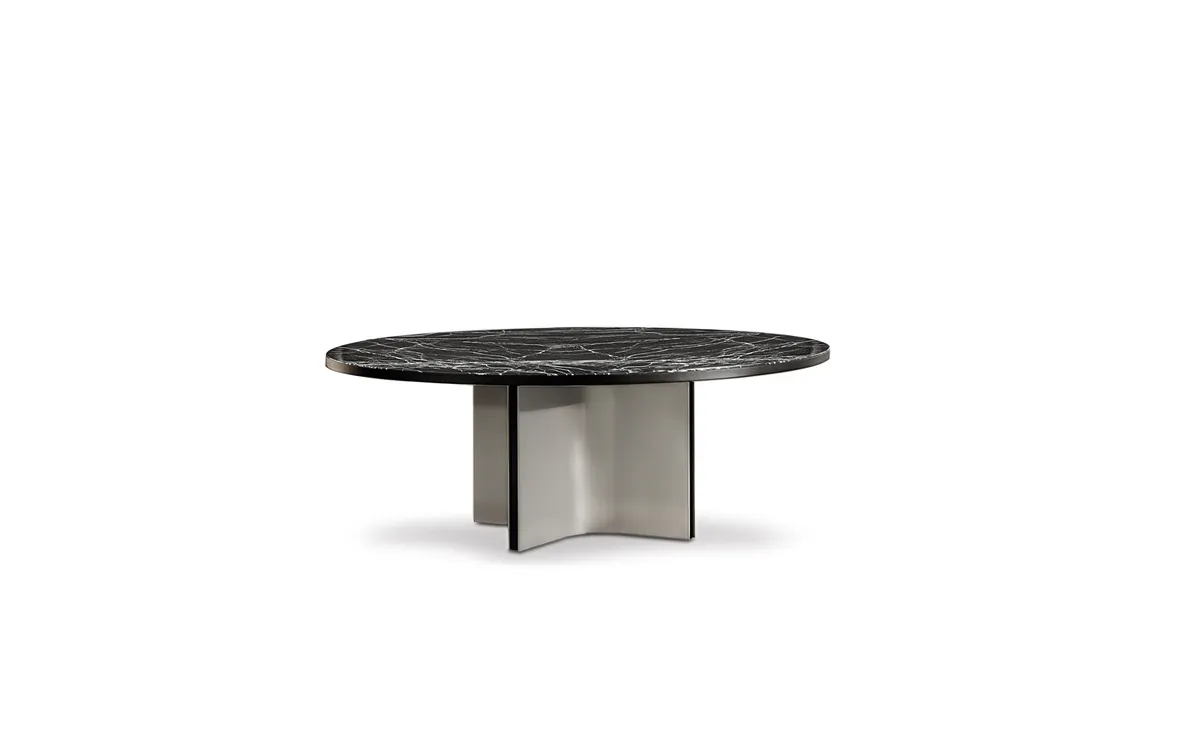
A thick round top rests on four thin vertical fins arranged as a cross, so the base reads as a single narrow column from most angles. The overhang is generous, letting chairs tuck in around the full perimeter without the legs interrupting the seating line.
HCD211B
HCD211B
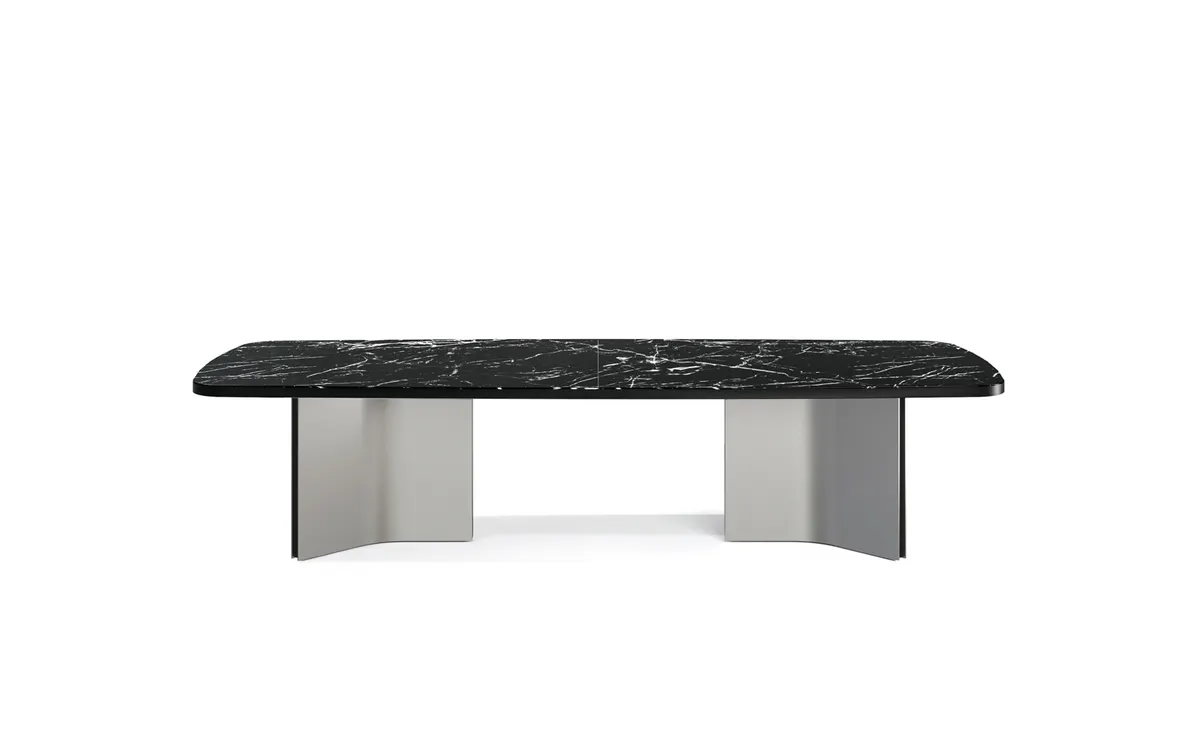
Two wide, curved panels hold up a long, rounded-rectangle top, leaving the ends of the table visually open. The legs sit inboard from the corners, so the mass of the table appears to float slightly above the floor rather than being anchored at its edges.
HCD213A
HCD213A
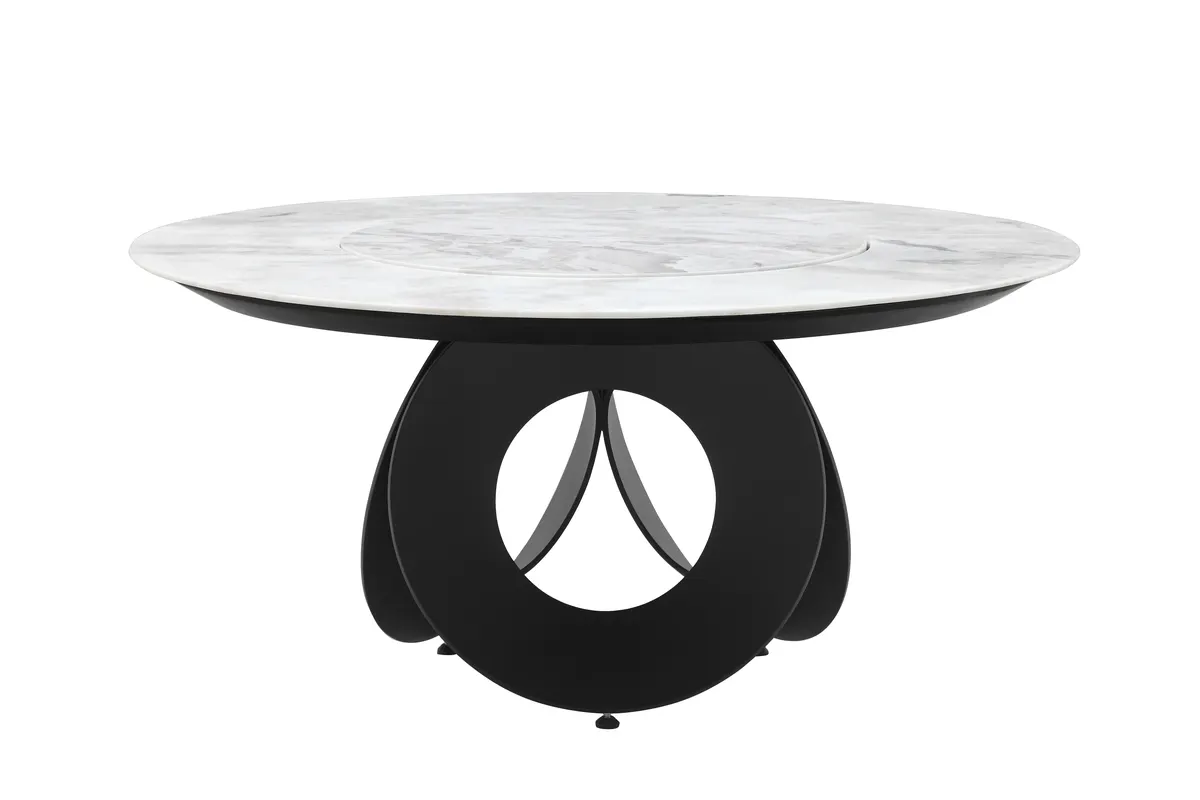
A pale veined round top rests above a base built from intersecting black discs. Each disc is cut with a circular opening, so the support reads as a ring of rings rather than a solid column. A smaller ring sits inset in the top surface.
HCD213B
HCD213B
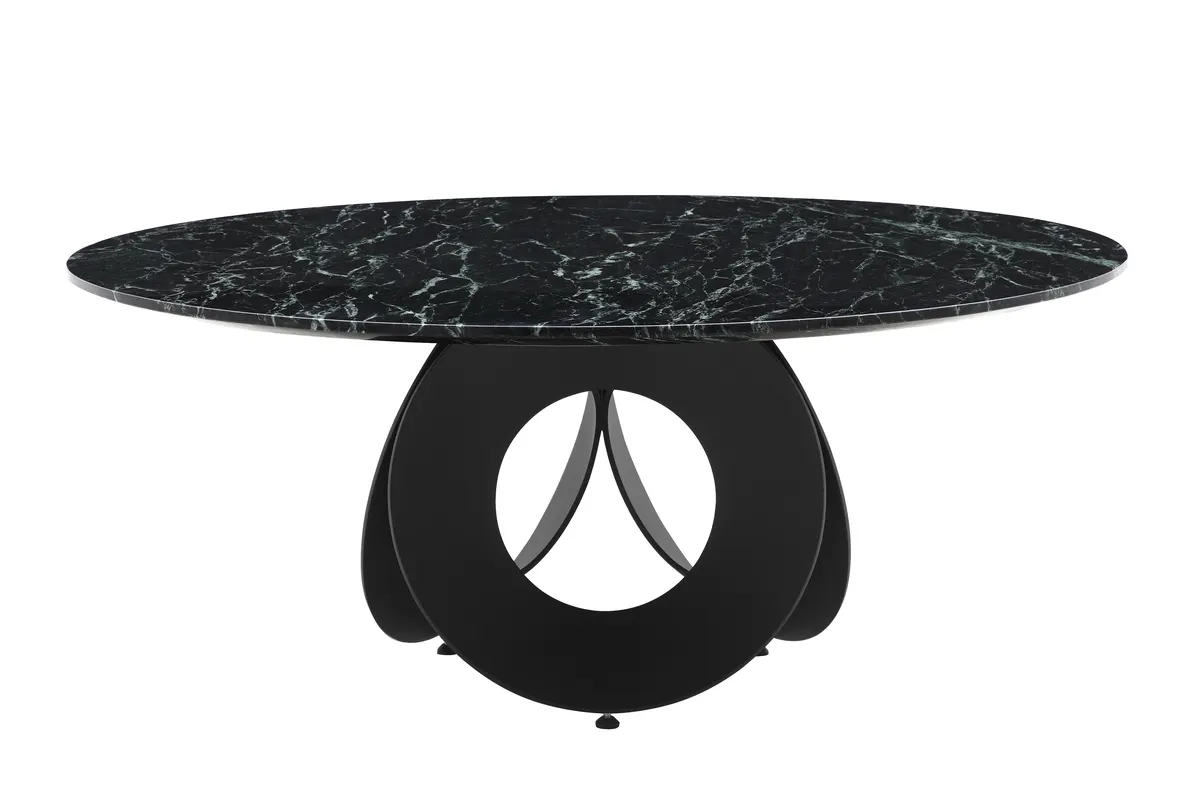
A round top rests on a base built from curved panels that overlap to leave a circular opening at the centre. The dark veined surface reads as a single disc, and the base lifts it clear of the floor on small feet.
HCD215
HCD215
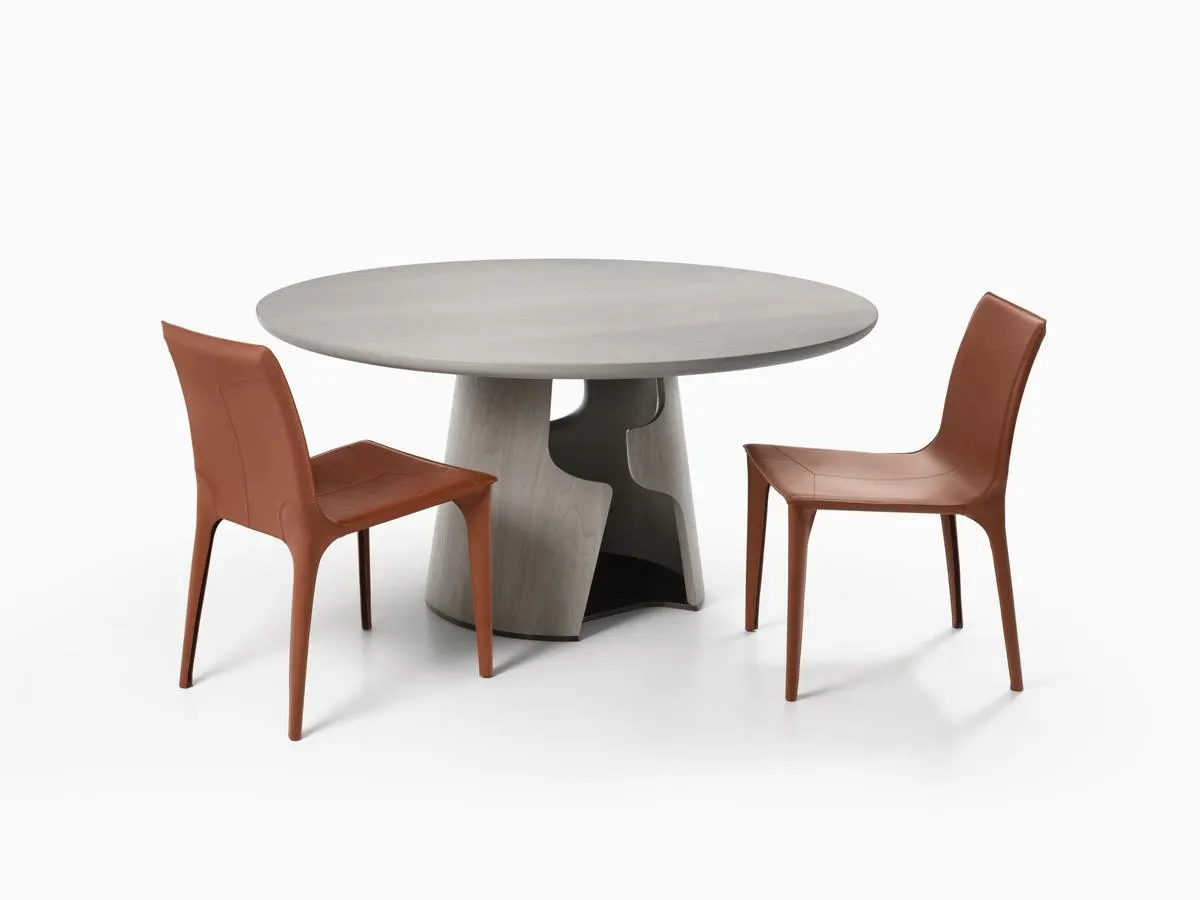
A thin circular top sits on a wide pedestal that has been cut open, so the base reads as two interlocking forms rather than a solid column. The opening keeps the centre of the table visually light while the footprint stays broad and stable.
HCD216A
HCD216A
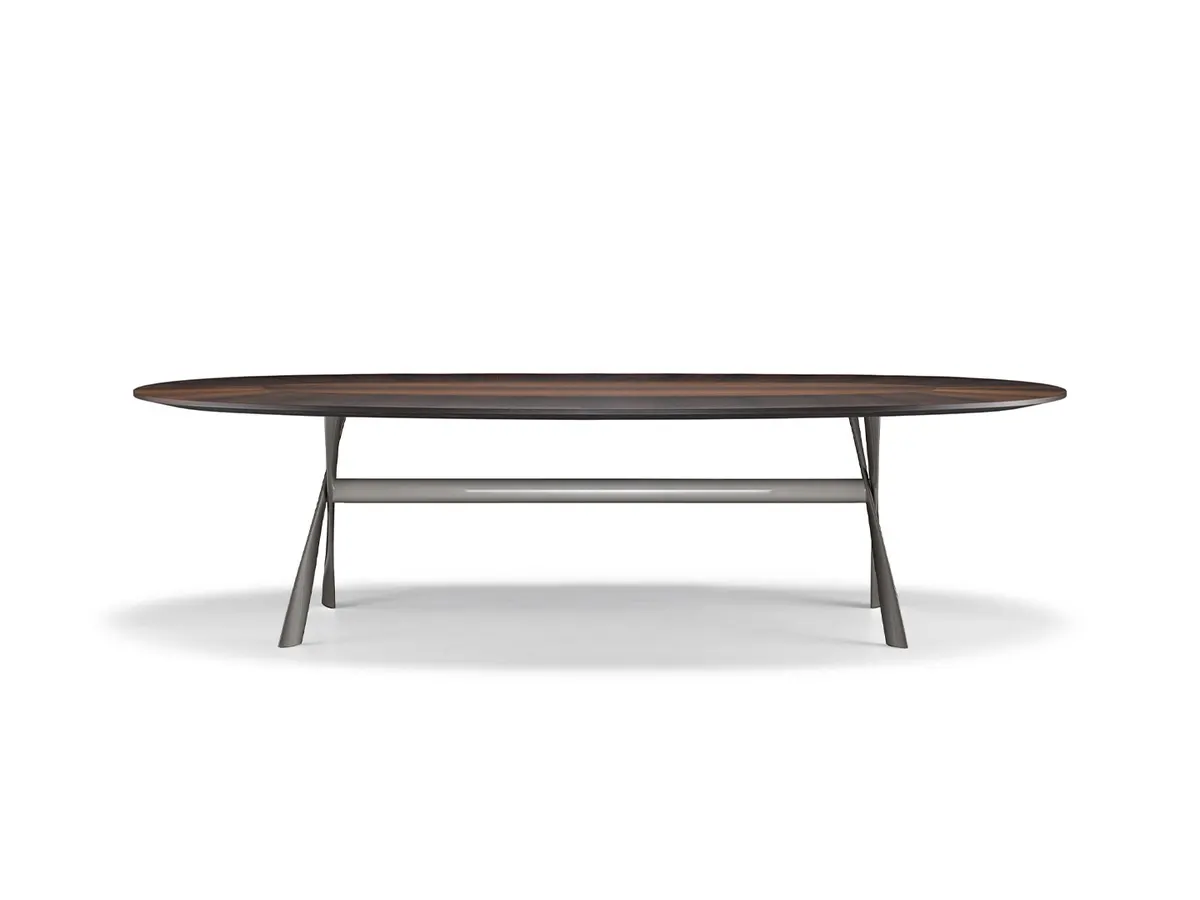
A wide oval top rests on four splayed legs that cross and meet a low stretcher, leaving the space beneath the top open. The dark glossy surface carries a single pale vein across its length, drawing the eye along the table rather than around it.
HCD225A
HCD225A
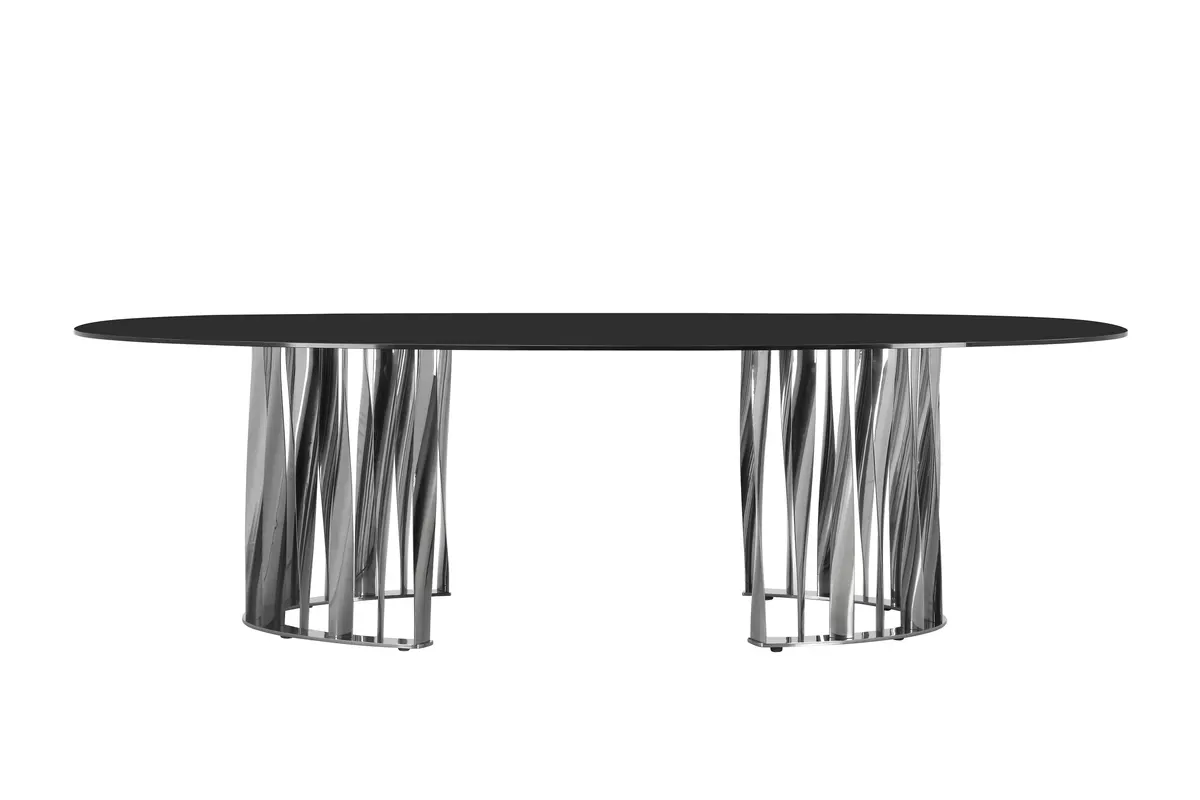
Two cylindrical pedestals carry a wide oval top, each built from twisted vertical slats that stay open rather than solid. The gap between the bases keeps the underside visible, so the table reads as a top resting on two woven drums.
HCD225B
HCD225B
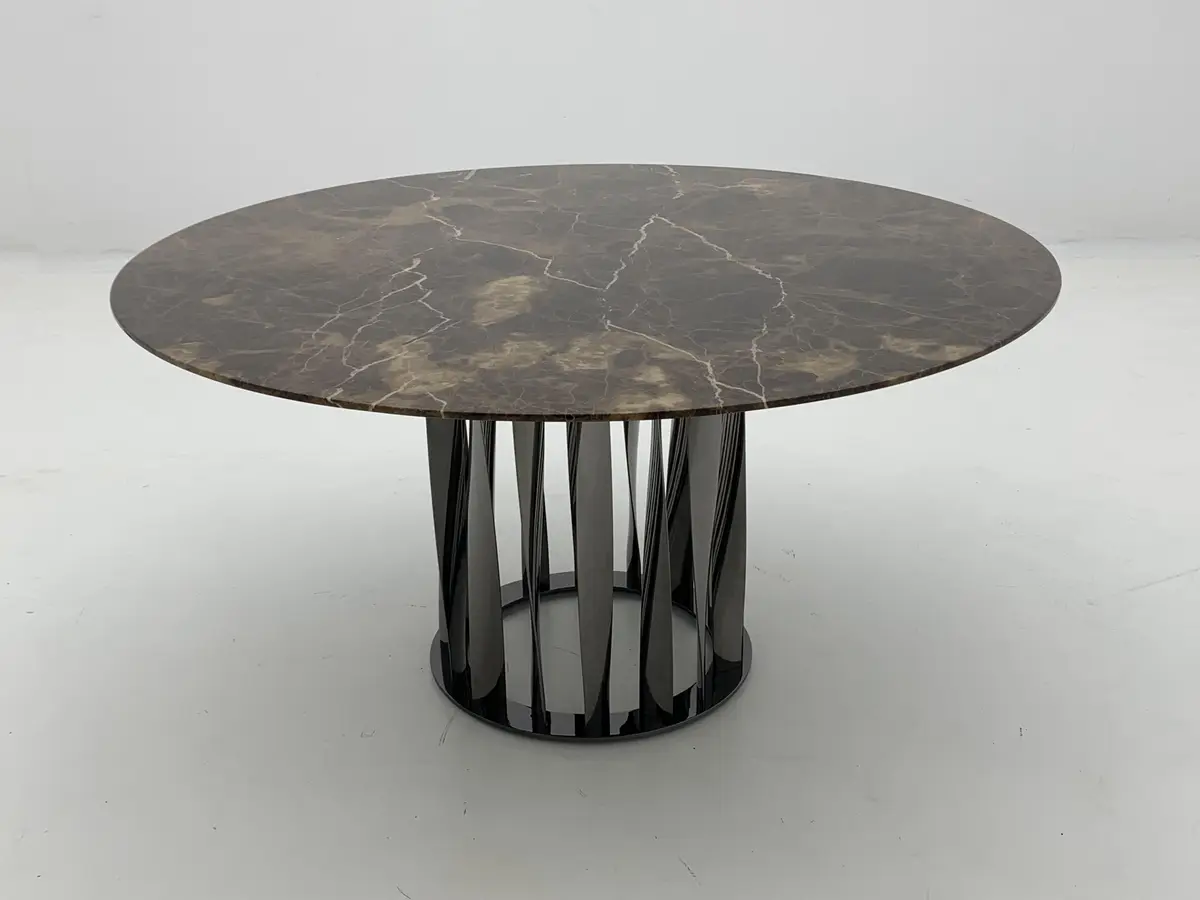
A circular top with a dark, veined surface sits on a drum base formed from curved vertical slats. The slats are polished to a mirror-like finish, creating a rhythm of light and shadow around the base. A low ring connects the slats at floor level.
HCD221
HCD221
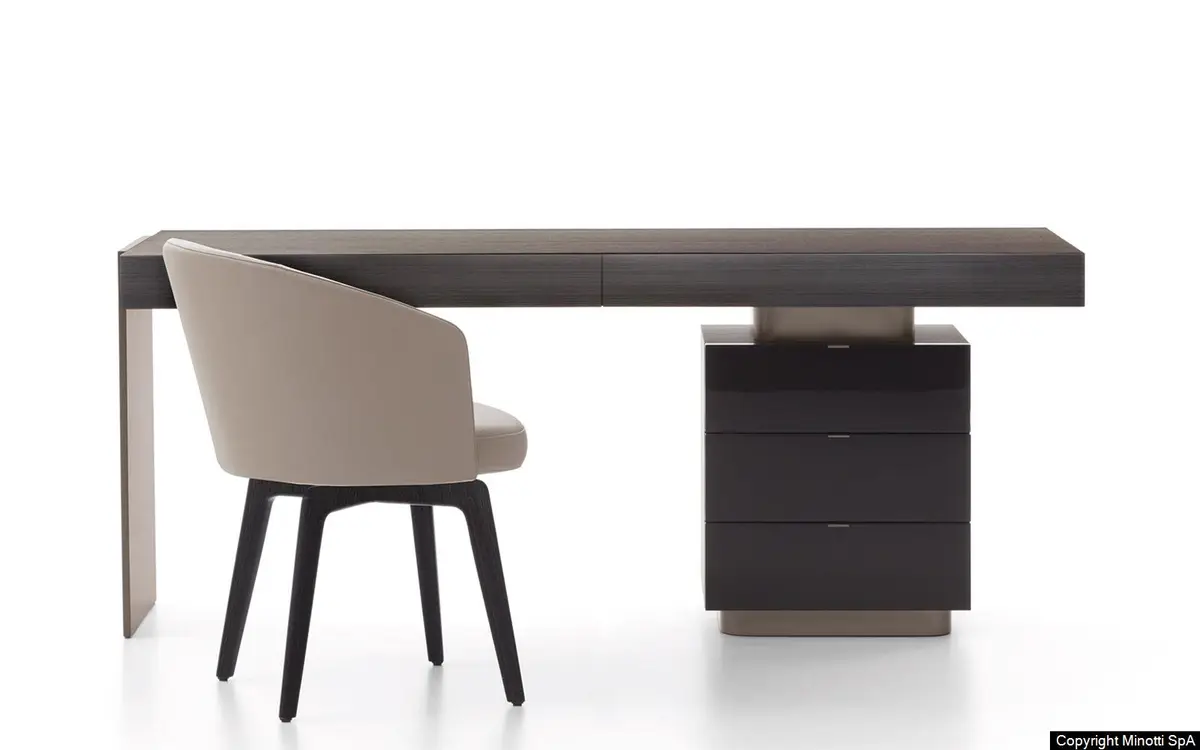
Designed with a balance of functionality and aesthetics, this dining table combines refined craftsmanship with timeless design. Suitable for residential dining spaces, restaurants, and hospitality projects, it brings a sophisticated atmosphere to any interior. Custom sizes, materials, and finishes are available to meet different design requirements.
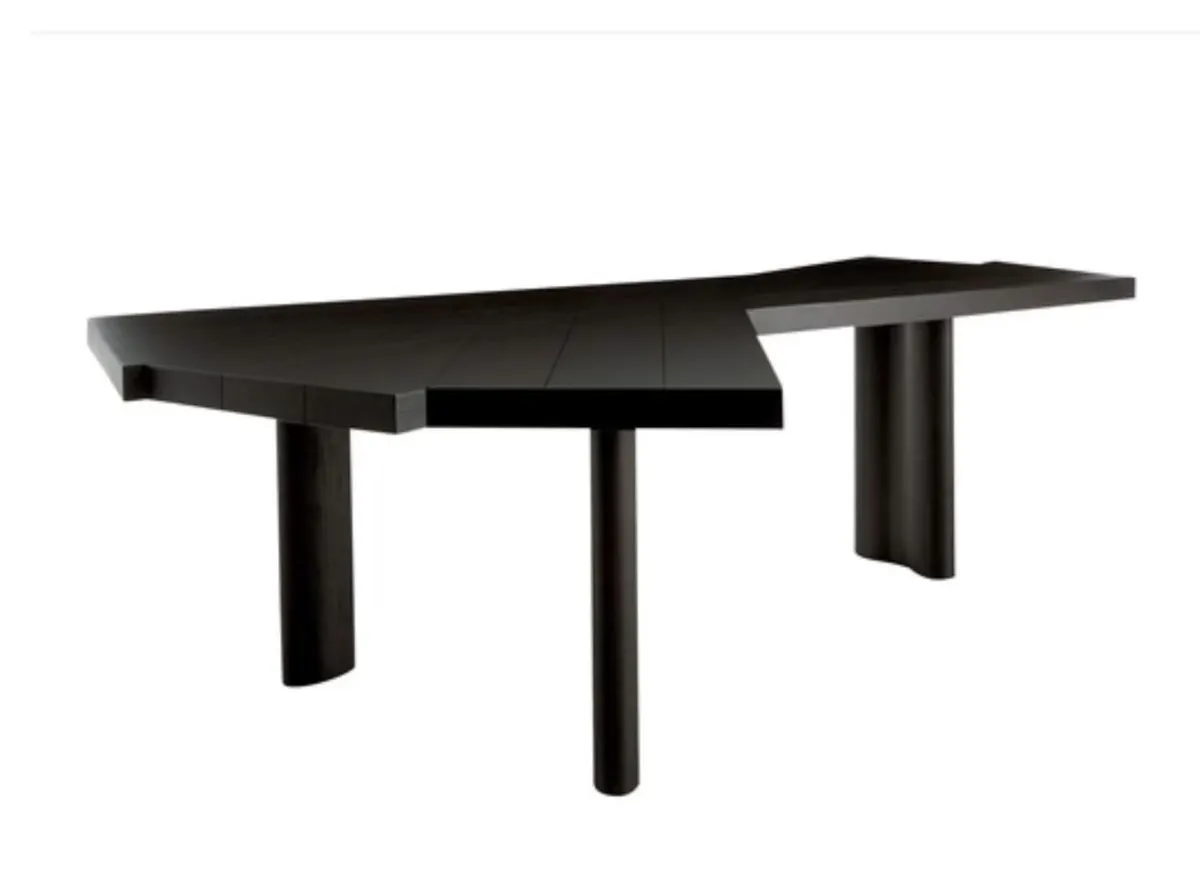
HCD223
HCD223
A dining table built around a broken, angular top rather than a rectangle. Two joined planes meet at an offset seam, so the edge steps in and out along the length and the surface reads as a folded shape. Legs gather in a pair at one end and stand alone at the other.
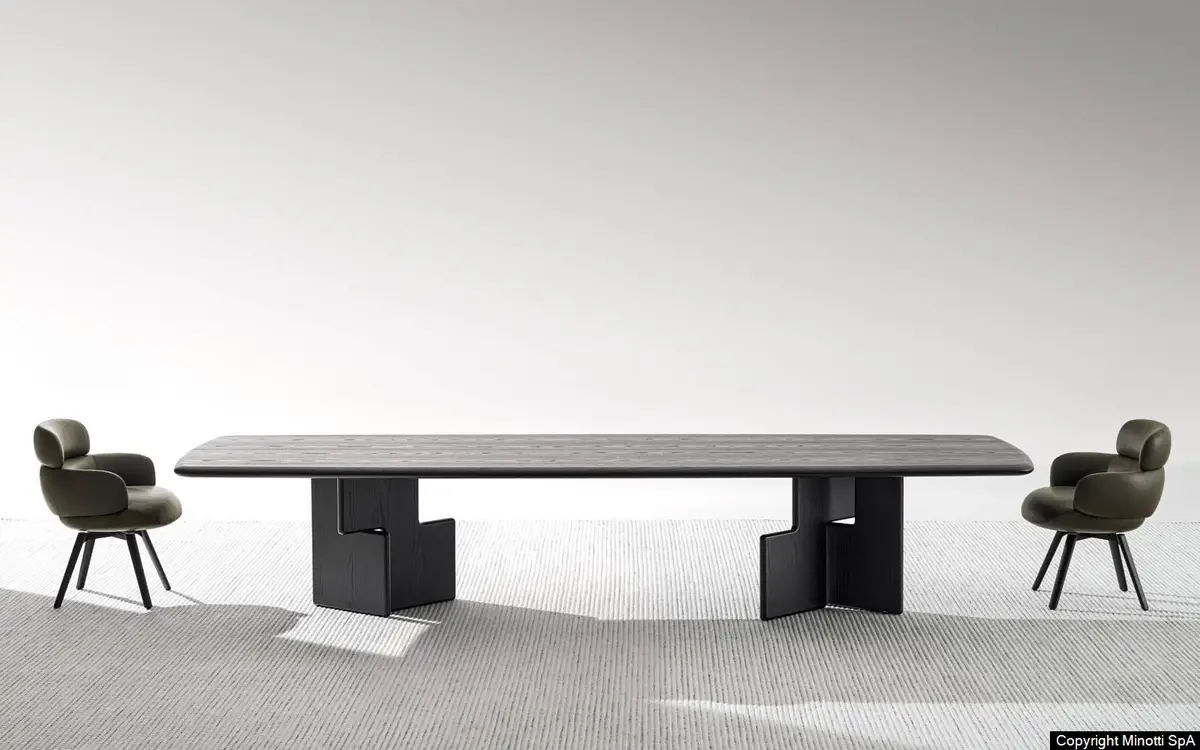
HCD226
HCD226
Two stepped panel bases carry a long, thin top, and the cut-outs in each base stop the table from reading as a solid block. The top overhangs at both ends, so the length stays visible from the side.
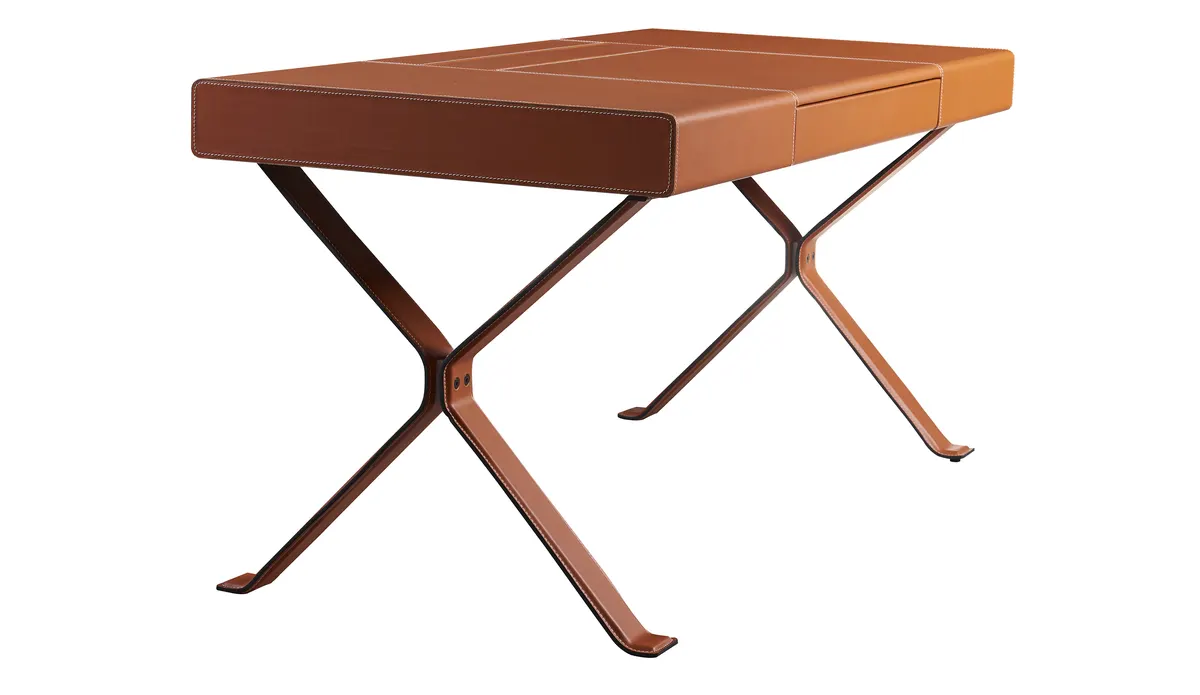
HCD229
HCD229
Designed with a balance of functionality and aesthetics, this dining table combines refined craftsmanship with timeless design. Suitable for residential dining spaces, restaurants, and hospitality projects, it brings a sophisticated atmosphere to any interior. Custom sizes, materials, and finishes are available to meet different design requirements.
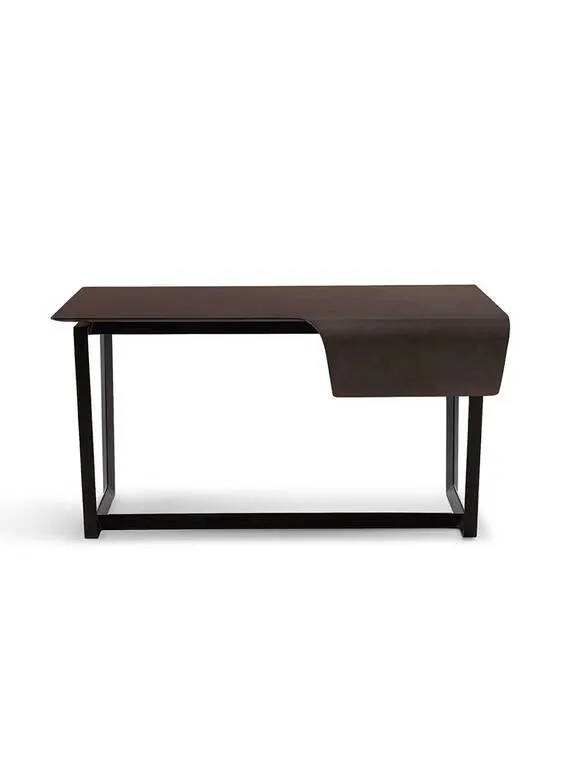
HCD230
HCD230
A flat top runs straight to one end and turns down into a full-depth panel, so the table reads as a single folded plane above a slim open frame. The opposite end stays open, leaving the lower structure visible from three sides.
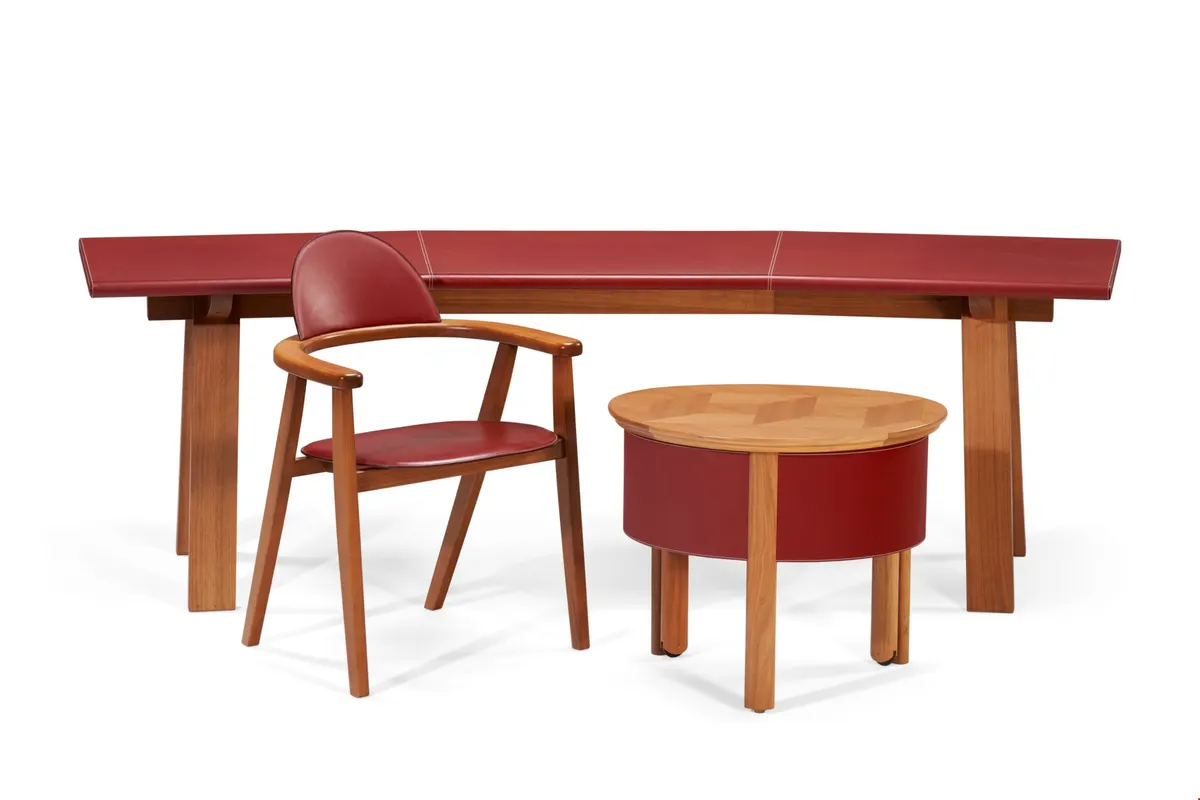
HCD231
HCD231
Three padded sections meet along stitched seams to form the top, and each seam is left visible rather than smoothed away. The top overhangs a warm-toned frame whose square legs drop straight to the floor, so the red surface reads as a single line held above the ground, with legs tapering slightly toward the floor.
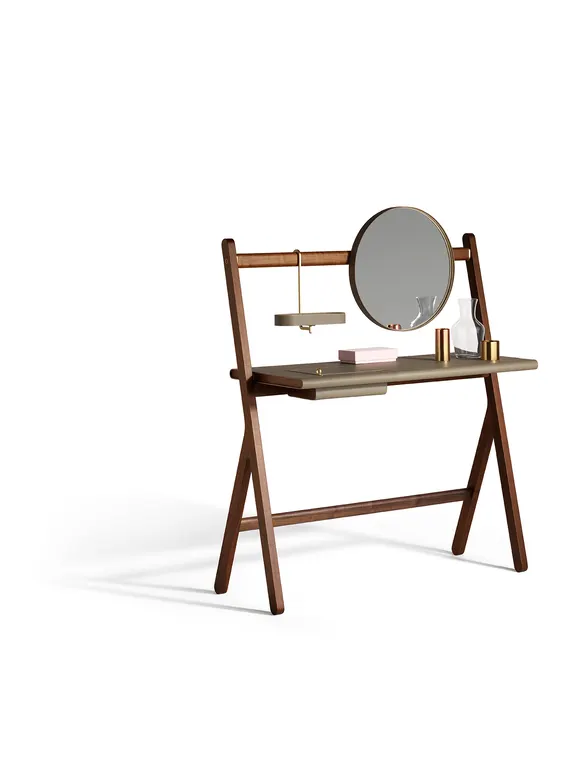
HCD232
HCD232
Two splayed legs cross at the floor and rise to a top rail, so the stand reads as an open frame rather than a cabinet. A round mirror hangs from the rail above a shallow tray top with a raised lip, and a small shelf floats beneath it on a short drop.